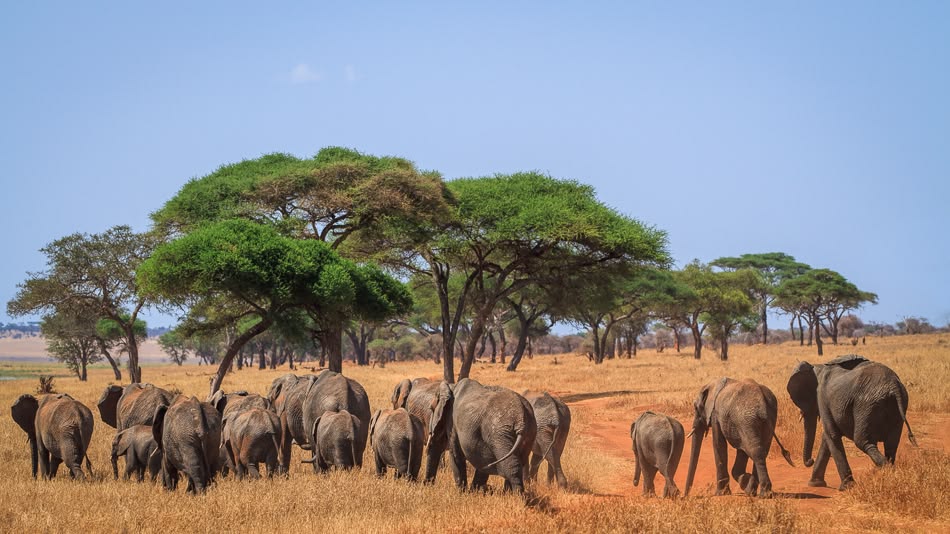
A guest spends five days in Tanzania, experiencing nature at its finest, witnessing elephant conservation in the Randilen Wildlife Management Area and staying at Olkeri Camps, nestled within the conservancy. Along the way, they meet the community conservation team and leave with a deeper connection to the landscape and the people working to protect it.
They see the conservation work lodges support in the wilderness areas they visit. They want to donate, but they do not always know how.
But what happens next?
For many conservation organisations, that moment of goodwill is where the fundraising opportunity begins and often where it ends.
The challenge is that the organisations doing the conservation work do not always have direct access to the guests who want to support it. Conservancies and community conservation organisations may have important causes but limited visitor traffic of their own. Meanwhile, lodges and camps welcome guests from around the world, yet often lack a simple, trusted way to connect those guests with the causes connected to their stay.
As guests leave, they may want to give back. But without a clear platform, a trusted cause or an easy way to contribute, that intention can disappear with the experience.
The guest may make a donation if there is a clear way to do so. They may follow the organisation on social media. They may promise to give again.
But without the right systems, a meaningful travel experience rarely becomes a lasting donor relationship.
The challenge is not necessarily a lack of generosity. It is the missing infrastructure between a guest's interest in wanting to donate and the conservancies that want to raise funds quickly.
The opportunity already exists
Shukran Donations creates something that traditional fundraising often struggles to manufacture: a direct, emotional connection between a person and a cause.
A visitor to a lodge located in a protected area has seen the landscape. They have experienced its wildlife. They may have met the people and the community whose livelihoods depend on it.
That experience can create a powerful desire to give back.
Research from Ethiopia's Bale Mountains National Park illustrates the potential. One study found that 75% of visitors were willing to contribute to a dedicated conservation fund beyond the existing park entry fee.
That finding should not be treated as a universal conversion rate. But it does point to an important opportunity: visitors can leave a destination with both the emotional connection and the willingness to support its future.The question is whether the funding infrastructure is ready to meet them.
Why guest interest does not automatically become long-term giving
1. The giving opportunity is not always available at the right moment.
A guest may feel most connected to a conservation cause while they are still at the destination. Yet the opportunity to give may not be visible, convenient, or clearly connected to the lodge or camp they are staying at.
There may be no dedicated campaign page, no simple digital payment option, or no clear explanation of what a donor would support, and they might have to leave without donating. By the time the guest returns home, the moment has passed. Goodwill needs a pathway.
2. Conservation organisations often do not own the guest relationship.
In tourism, the guest relationship usually belongs to the lodge, camp, tour operator or destination partner.
These organisations are already communicating with the tourist, earning their trust and shaping their experience. Conservation organisations, meanwhile, may be doing the work that guests care about most but have limited access to the guest journey.
This creates a structural gap. The organisation with the strongest conservation story is not always the organisation with the most direct access to the donor. A more effective model connects the two.
The missing connective tissue
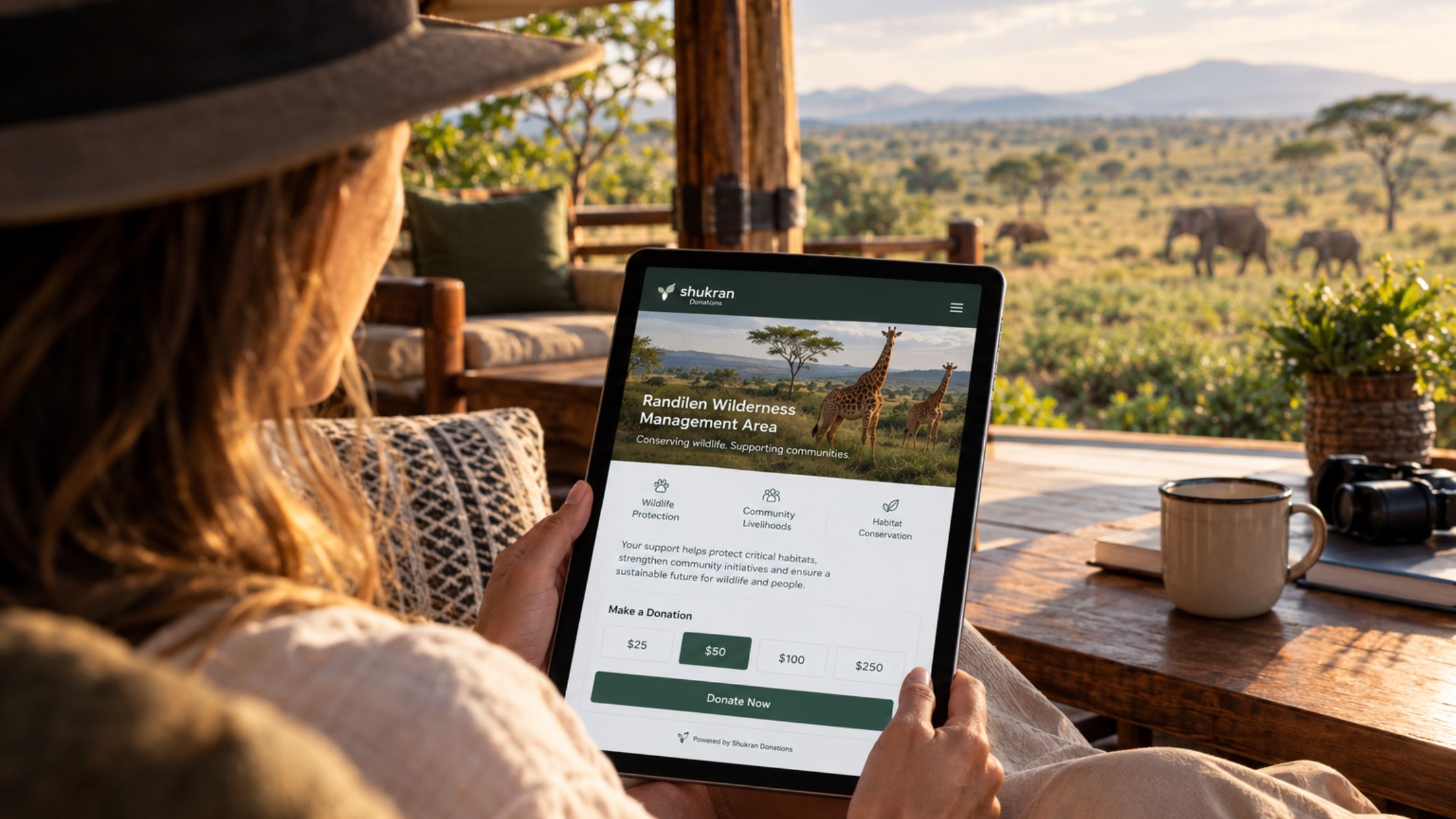
What conservation organisations need is not simply another donation button. They need infrastructure that helps them reach, engage, retain and report to donors through the tourism ecosystem.
That includes: Without these systems, fundraising can remain dependent on one-off campaigns, personal networks and the goodwill of individual staff members. With them, a conservation organisation can begin building a donor base that compounds over time.
From a one-time donation to a lasting relationship
The first donation is important. But it is only the beginning.
A guest who gives $50 after a safari may be willing to support the same organisation again in six months, contribute to a specific project, or become a long-term donor.
That relationship does not happen automatically. It requires communication that reminds the donor why they cared in the first place. It requires credible reporting that shows what their contribution helped make possible. And it requires a way for the organisation to remain connected to the donor beyond the original travel experience.
The goal is not simply to collect more donations. It is to build a relationship between people and the places they care about.
Why tourism operators matter
Lodges, camps and tour operators are uniquely positioned to help make this happen.
They already have the guest's attention. They understand the experience the guest has just had. And they can introduce conservation initiatives in a way that feels relevant rather than transactional.
A guest who has spent days exploring a landscape may be far more receptive to supporting its protection than someone encountering the same cause through a generic fundraising appeal.
This is where tourism-led conservation can become more than a partnership between a business and a nonprofit. It can become a shared funding ecosystem.
The operator creates the connection. The conservation organisation provides the cause and the impact. The right infrastructure helps turn that connection into sustained giving.
What is a Donor Engagement Platform?
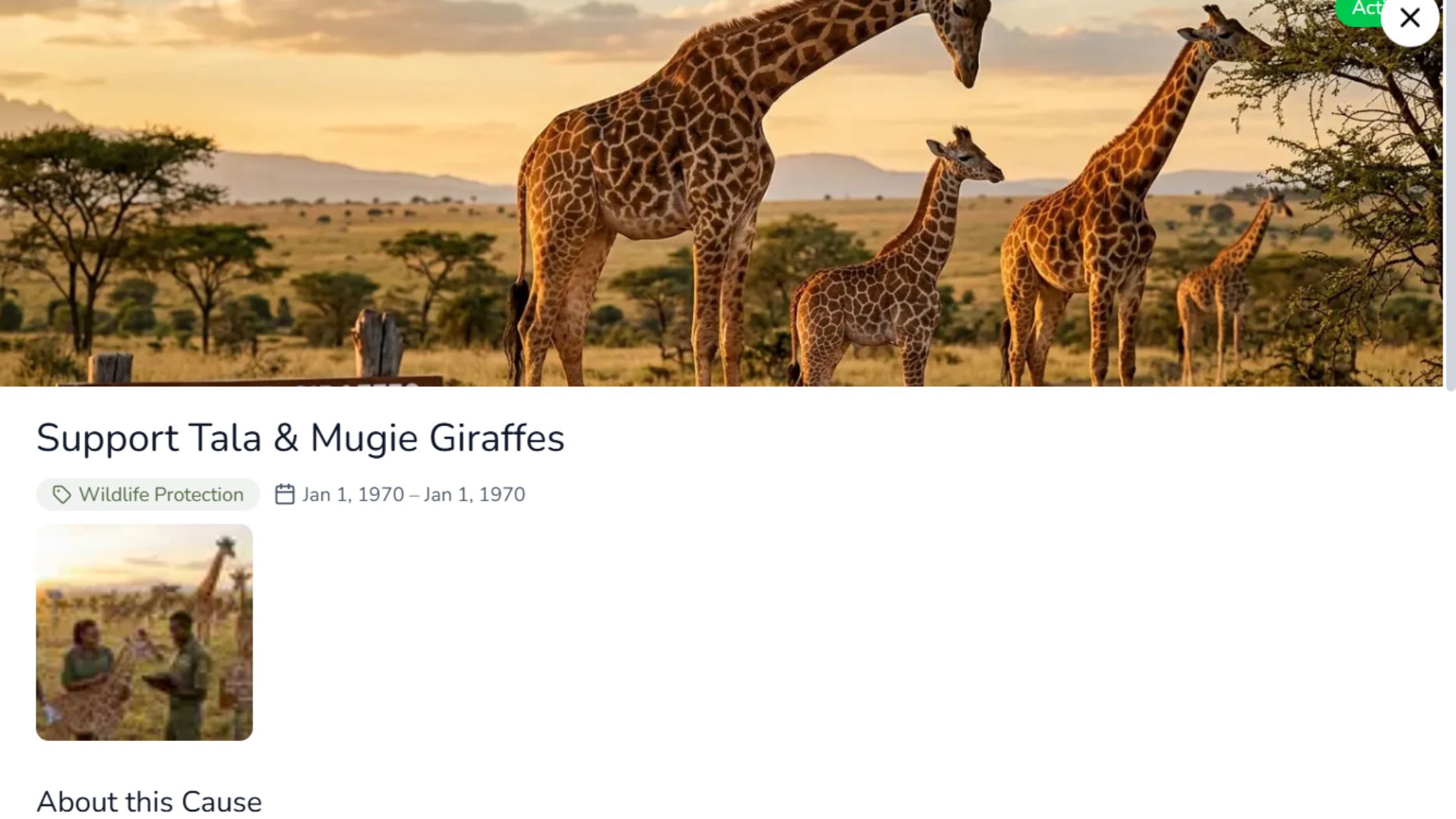
A Donor Engagement Platform (DEP) is designed to help organisations build and manage these relationships.
Shukran Donations' DEP connects tourism operators with conservation and community organisations through a networked, white-label fundraising model. It allows operators to create branded fundraising environments while connecting guests to trusted causes.
For conservation organisations, this means access to more than a payment mechanism. DEP provides the infrastructure to support the full donor journey from campaign pages and payments to donor communications, impact reporting, dashboards and analytics.
It also introduces a Trust Score, designed to make institutional credibility, social proof and reporting practices more visible to operators and guests.
The result is a more connected approach to conservation fundraising: guests have a trusted way to give, operators can activate the goodwill created through travel, and conservation organisations can build relationships that continue long after the guest returns home.
A more sustainable future for conservation funding
Across East Africa, tourism brings millions of people into direct contact with landscapes, wildlife and communities worth protecting.
The opportunity is not to assume that every visitor will become a donor.
It is to make it easier for the people who want to give to do so and to give conservation organisations the tools to turn that first act of generosity into something lasting.
The future of tourism-led conservation is not just about creating more opportunities to donate. It is about building the infrastructure that allows goodwill to become sustained support.
Ready to build stronger donor relationships?
If you are a conservation organisation, protected area manager, conservancy, tourism partner or a property with causes looking to turn guest goodwill into a more sustainable funding channel, Shukran Donations can help you build the infrastructure to engage, retain and grow your donor base.
Book a demo with Shukran Donations to explore how DEP can support your fundraising and donor engagement goals.