The Business Nobody Planned: What TripAdvisor's Founder Told Us About Trust, Reviews and the Future of Travel
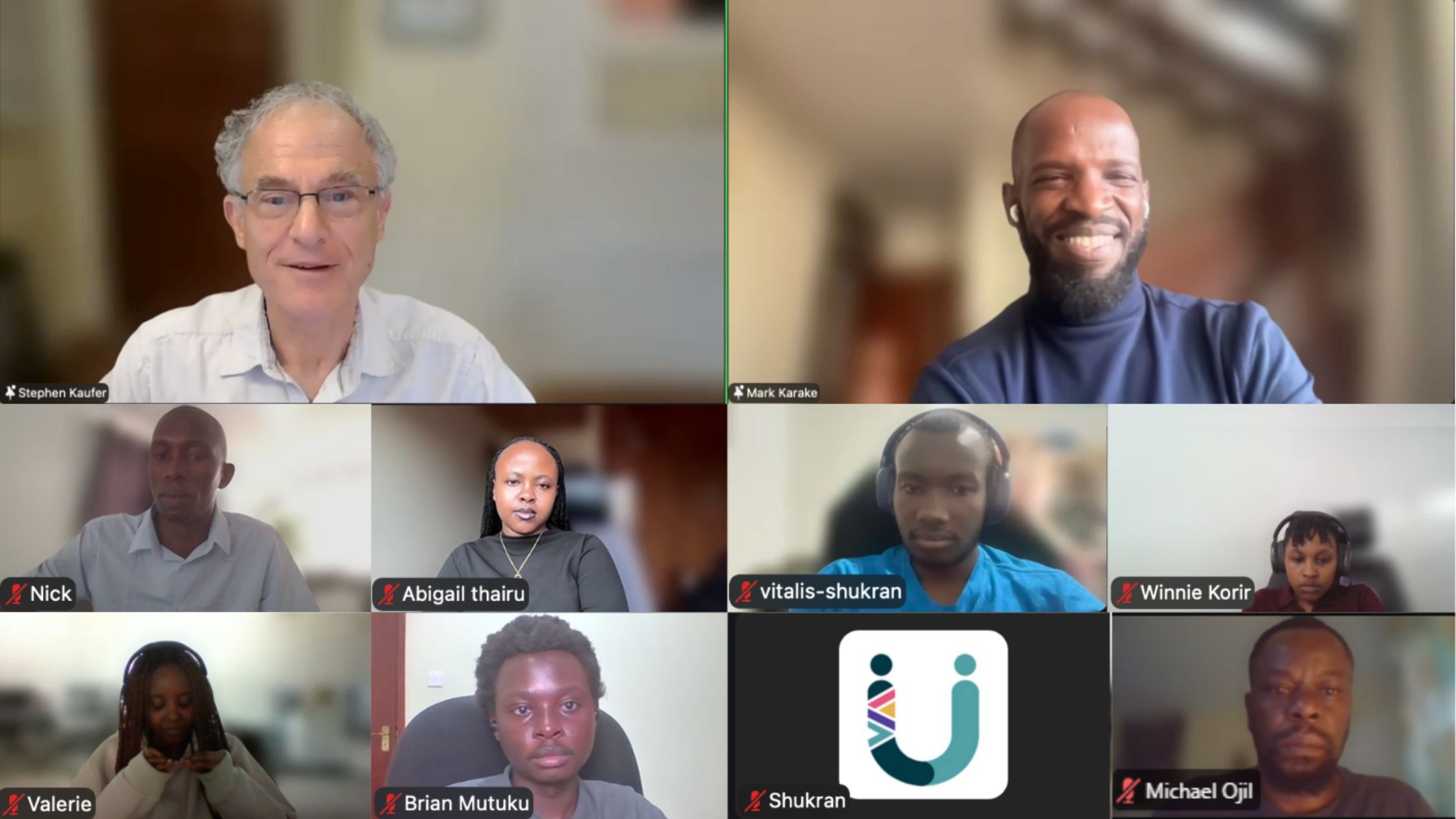
Notes from our fireside chat with Steve Kaufer, co-founder of TripAdvisor, 3 September 2026
Steve Kaufer built one of the most influential companies in travel almost entirely by accident. That is not a slight. It is the most useful thing about his story, and it is why we invited him to open our Takeoff season with a fireside chat.
The version most people know is that TripAdvisor democratised travel reviews. The version Steve told us is stranger and more honest. He did not set out to build a review site. He argued against reviews. And the feature that eventually defined the company was launched over his objections, as a test he expected to fail.
Here is what we took from the conversation and what it means for the travel economy we are building here.
It started with three identical brochures
In 1998 Steve was planning a family trip to Mexico. His travel agent handed him three brochures. Every one of them looked the same. Every one of them was written by someone with an interest in selling him something.
So he spent days researching online instead. He found real traveller accounts, and those accounts changed a purchase decision worth several thousand dollars.
That is the whole insight. The information that changes behaviour is not the information the seller controls. It is the information the last customer left behind.
We recognise this instantly. In East African travel, the person closest to the guest experience is very often the person with the least documented reputation. The safari guide who made the trip unforgettable has no record of it. The property team that turned a good stay into a great one leaves no trace. All the documentation flows to the brand.
The pivot that saved the company
TripAdvisor was incorporated in February 2000, just after the dot-com crash. The original plan was not a consumer site at all. It was a small, profitable B2B data licensing business, selling structured travel data to Expedia, Travelocity and AOL Travel.
It did not work. At the low point, Steve told us, they had a single client paying around $2,000 a year. Then 9/11 hit the travel industry. With roughly six months of runway left, he offered to return the remaining capital to his investors.
They tried CPM advertising. Business listings. Various direct-to-consumer angles. None of it moved.
The breakthrough was almost mundane. They added a "check price and availability" link to each hotel page, deep-linking through to Expedia. Expedia was earning about 20% margin on those bookings and shared roughly half of it as a referral fee. TripAdvisor went from zero revenue in September 2001 to break-even by March 2002 and then grew profitably every quarter until COVID.
Steve's lesson from that period was blunt: when the product is not finding its market, pivot fast. Flexibility is survival.
His second lesson was the mirror image, and it is the one founders hear less often. The bigger you get, the slower you should move on big bets. At twenty people, speed costs you almost nothing. At two thousand, every pivot carries an enormous opportunity cost.
The reviews he did not want

Steve's objection to user reviews was reasonable. He assumed people only bother to write when they are angry. Open the floodgates and you get a wall of complaints, a furious hotel industry, and a product nobody trusts.
An early employee pushed for a test anyway. The review form went live reluctantly.
The average review came in between 3.5 and 4 out of 5. Today the platform average sits around 4.2 to 4.3.
Part of that is a selection effect that compounds beautifully. People read reviews, avoid the genuinely bad properties, and arrive with calibrated expectations. Better information does not just describe the market. It improves it.
The industry response split along a line we see in our own market. Chains resisted. Independent properties embraced it, because for the first time a small, excellent, unknown property could be discovered on merit rather than on a marketing budget. Travel agents disliked it most of all because it dissolved their position as gatekeepers of information.
The practical advice, unfiltered: what travel businesses can learn
A large part of the session was Steve answering operator questions directly. The advice was specific enough to act on this week.
On asking for reviews. Ask consistently, and respond to every single one, including the negative ones. A second email a week after the stay often converts better than the ask at checkout. Personalise it: naming a specific staff member is what triggers a real, detailed response rather than a generic one.
On freshness. Volume is not the whole game. Recent reviews signal an active, well-run property. A wall of five-star reviews from three years ago reads worse than a steady trickle from last month.
On rankings. Because the score is a linear average, moving your overall rating is slow and hard. Recency, though, does influence where you sit in the ranked list. His shortcut: find a niche category where you can genuinely rank first, "best adventure tour in Kenya" rather than "best tour operator", and display that badge everywhere. Platforms will not object. Their logo travelling further is a benefit to them.
On photos. Submit as many as you can. It is free. Guest-style photos consistently outperform polished management shots.

On detail. Keep the homepage clean, but make deep information findable. Booking.com's dense, unglamorous pages are not an accident of bad design. They are the output of relentless testing.
On distribution. Properties that built their cost structure around 20 to 25% OTA commissions are locked in, and independents that try to market everywhere at once rarely win. Pick a specific high-value source and go deep.
Why this matters for what we are building
Steve was candid about where TripAdvisor goes from here. Reclaiming ground from Google and ChatGPT will be very hard, and traditional hotel reviews on their own are no longer a strong enough business.
We think that is right, and we think it points at where the value has moved. It has moved to the people.
A review of a lodge is increasingly a commodity. A verified record of the guide who led the walk, the tracker who found the leopard, and the team that ran the property is not. That record does not exist yet anywhere in our market.
Shukran Pocket
Shukran Pocket is where tips settle for every recipient across our network. A guide, a housekeeper, a waiter. One account, held by the worker, wherever they work.
Tip income has always been invisible. It arrives in cash and leaves no record, so a worker who has earned well for years still cannot prove any of it. No proof of income means no loan, no pension, no plan. Pocket turns each tip into a permanent record, then builds savings, investment access, pensions and better-priced credit on top of it. This is the founding idea of the company, not a feature. Meet the newest member of the Shukran brand family.

Pocket for Tour Guides
For guides, Pocket comes with a Guide Profile built-in. Guides get a professional page of their own: bio, certifications and reviews from guests who tipped them, with an operator brand alongside. Only guests who tipped through Shukran can review, so nothing on it can be faked. Your guides' reputations compound, and yours compound with it.
If you run a property or a fleet of guides and need to streamline tip access for guides, write to us at support@shukran.co or WhatsApp # +254. Onboarding a team takes an afternoon.
Twenty-six years ago, the answer to three identical brochures was to let travellers speak. The next answer is to make sure that when they say thank you, it reaches a person and it stays with them.
Want to join the conversation?
Sign up to receive future fireside chat invites to The Watering Hole series—by Shukran, bringing you closer to leaders, entrepreneurs and changemakers shaping the future of travel.
Shukran – Tipping Changes Lives.