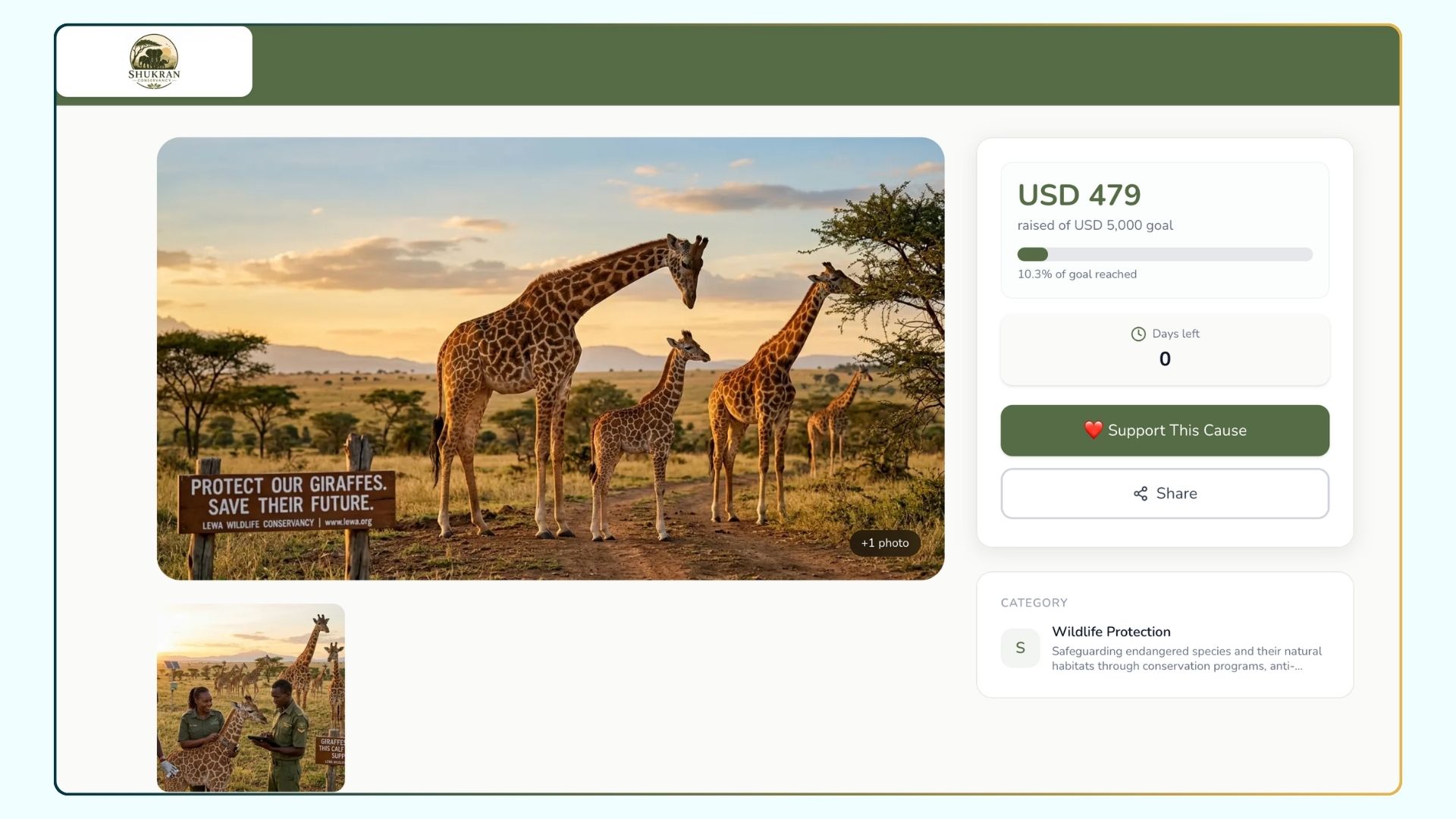
At Shukran, we are building the Donor Engagement Platform, or DEP, to help travel and hospitality operators channel guest support toward conservation, community, and social impact initiatives.
DEP enables operators to raise funds for their own CSR programmes or for trusted external organisations, while giving donors a clearer view of where their money goes and what it helps achieve. You can learn more about the platform at shukrandonations.co.
As we have developed DEP, one question has increasingly shaped our thinking: how do we move from simply communicating impact to actually demonstrating it?That question started with a conversation about greenwashing in travel and hospitality. Greenwashing occurs when an organisation presents itself as more environmentally responsible than its actual practices justify. In travel, the same tension extends into broader claims around sustainable tourism, conservation, community benefit, and local economic impact.
A lodge may say it supports conservation. A tour operator may say it empowers local communities. A hotel group may say that every stay contributes to positive social impact. These statements may be entirely legitimate, but the important question is whether a guest, partner, investor, or community stakeholder can easily see what sits behind the claim. How much was contributed? To whom? Over what period? What was achieved? Who benefited? What evidence exists?
That led us to a broader concept: impact washing.
Impact washing is not necessarily about false claims. More often, it is about claims that are difficult to substantiate because the underlying evidence is fragmented across annual reports, spreadsheets, project photos, PDFs, newsletters, partner communications, and institutional memory. For organizations doing meaningful work, this creates a real problem. The impact may exist, but it is difficult to demonstrate in a structured, accessible, and credible way. This is particularly relevant for operators trying to show genuine CSR impact without relying on broad sustainability language.
From impact reporting to impact accountability

DEP already includes an impact reporting and communications capability. The purpose is to help organizations keep donors informed after a contribution has been made. That matters because giving should not end at the payment confirmation screen. Donors should be able to see progress, outcomes, and what their contribution helped make possible.But reporting is only one part of the solution. Reports are episodic. They are created at specific moments and usually package selected information for a particular audience. What was missing was a persistent record underneath those reports.
That led us to a new product concept: an Impact Ledger. The idea is simple. Every meaningful impact claim should have a structured record behind it. If an organisation says it built four classrooms, funded a ranger programme, supported 600 students, restored a water point, or mobilised $200,000 for conservation, that achievement should exist as a defined Impact Record.Each record can capture the core facts: the project, time period, location, funding, outputs, outcomes, beneficiaries, implementation partner, and status. Just as importantly, each record can be linked to supporting evidence. That distinction became central to the product design:
Impact Record = what happened.
Evidence = how we know.
A claim that four classrooms were constructed might be supported by project reports, invoices, photographs, completion certificates, partner confirmations, beneficiary data, or an independent evaluation. The goal is not to suggest that every claim has been independently verified. The goal is to make the strength and provenance of the evidence visible. That is the shift from impact storytelling to impact accountability.
Why an Impact Ledger matters
Over time, individual Impact Records become something much more valuable: an institutional history. Instead of impact disappearing into old reports, it accumulates. Year after year, project after project, the organisation builds a structured track record of what it has achieved and the evidence behind it. That record can then power multiple surfaces: the organisation's public impact profile, donor reports, CSR pages, fundraising campaigns, guest communications, and partner updates. This is where the concept becomes particularly relevant to sustainable tourism and the wider travel and hospitality industry. The sector is full of broad claims around sustainability, conservation, and community impact. Some operators are doing extraordinary work, but the evidence is often difficult to discover or compare. A more useful model is to move from statements such as "we give back" to something much more concrete: See our impact. Here is how much our guests helped mobilise. Here are the organizations we support. Here are the projects. Here are the outcomes. Here is the evidence. That changes the nature of the conversation. It moves CSR and sustainability communication from aspiration toward demonstration.
From impact claims to demonstrable CSR impact
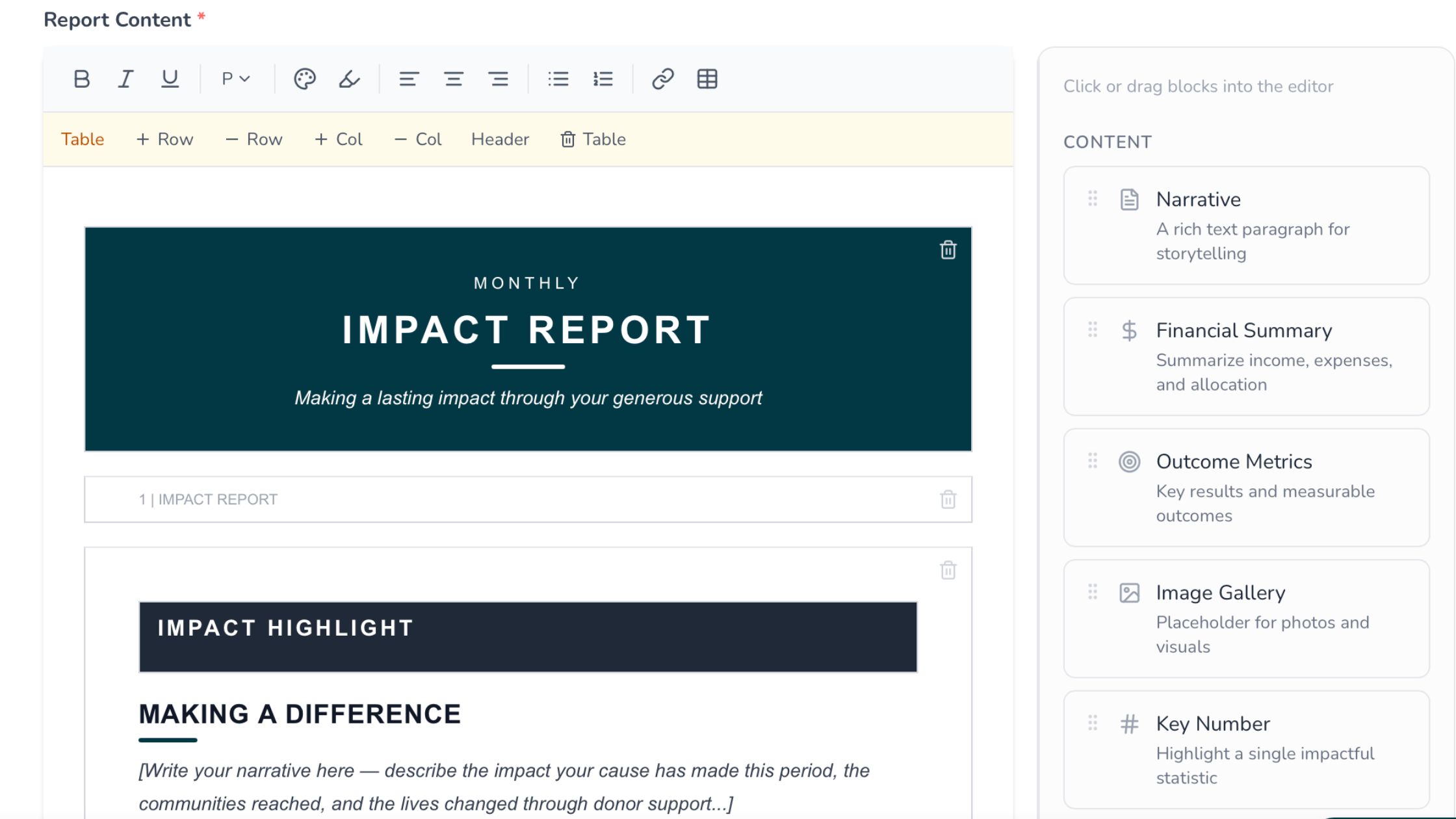
The Impact Ledger also fits naturally into DEP's broader architecture.
The Trust Score answers whether an organisation appears credible and trustworthy.
The Giving layer enables a guest to support that organisation or initiative.
The impact layer shows what has actually been achieved.
The Reports layer keeps donors informed over time.
Together, the journey becomes:
Trust → Give → Impact → Report → Give Again
This has implications beyond fundraising. It creates the foundations for a broader impact accountability layer across travel and hospitality.
A conservation organisation can show what it achieved. A lodge can show what it helped enable. A tour operator can show what its guests contributed. A donor can see what their contribution was connected to. The same underlying impact record can support each of those perspectives.
For the travel industry, this creates a practical way to move beyond greenwashing in travel and hospitality and beyond impact washing. It gives organizations a stronger way to demonstrate sustainable tourism outcomes, communicate CSR impact, and connect impact reporting to documented evidence.
That is the opportunity we arrived at.
We started by asking what greenwashing really means. We ended up with a much more useful product question: What if every meaningful impact claim had a record behind it, and every record had evidence behind it? That is the thinking behind the Impact Ledger. Not another place to tell an impact story. A better way to show the record behind it.
Ready to start? Talk to us today.